







Insect Rearing Bags in Entomology: Applications, Advantages, and Research Insights
Introduction
Insect rearing is a foundational component of modern entomology, underpinning controlled studies on insect biology, behaviour, ecology and interactions with host plants and natural enemies. Whether the research question concerns pest population dynamics, vector-borne disease, pollination ecology, or insect–plant co-evolution, investigators require containment systems that balance reproducibility with biological realism (Singh, 1977; Cohen, 2015; Schneider, 2009).
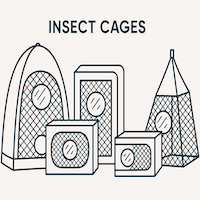
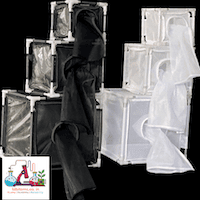
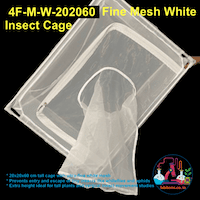
Insect rearing bags — flexible, mesh-walled enclosures tied around host-plant material or placed over rearing substrates — have become an important complement to traditional rigid cages. They allow direct enclosure of leaves, branches, inflorescences or potted plants in the laboratory, greenhouse or field, and are particularly well suited to phytophagous and plant-associated insects whose development depends on live host tissue. Their adoption in behavioural, ecological and crop-protection studies reflects a broader shift toward experimental systems that retain plant–insect context rather than eliminate it.
These bags are helpful for studying a range of insect responses, including the measurement of Economic Threshold Levels (ETL), plant-to-insect and predator-to-prey interactions, the bionomics of insect species, the biology of insects in natural environments, and insect behaviour in relation to climate change. They are also valuable for studying insect responses to different host-plant genotypes. For example, after narrowing a breeding programme down to a few genetic varieties for insect resistance, the researcher may wish to determine which among the shortlisted varieties performs best. Close observation can even help track insect resistance down to specific plant parts, since not all plant parts necessarily contribute equally to a variety's overall resistance. Close observation within insect rearing bags helps narrow this down to the particular plant part of interest.
Scientific Background
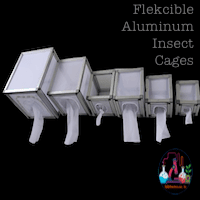
Controlled rearing maintains insect populations under defined physical and biotic conditions in order to study life-history traits, feeding and oviposition behaviour, reproduction, and responses to environmental variables (Cohen, 2015). Rigid systems such as glass jars, polystyrene vials, acrylic cages and aluminium-framed mesh cages (e.g. BugDorm-style 30 × 30 × 30 cm cages) remain the standard for many taxa because they allow precise control of airflow, temperature, humidity and light (Schneider, 2009; Cohen, 2018).
Flexible mesh rearing bags — sometimes termed sleeve cages, branch bags or organza bags — address a different experimental need: enclosing living plant material in situ without removing it from its canopy, pot or field plot. The breathable fabric permits:
- adequate gas exchange, reducing humidity-induced mould and mortality;
- natural diurnal light and temperature fluctuation, particularly in field deployments;
- direct containment of herbivores on their natural host, preserving plant–insect chemistry and structural cues.
These properties are valuable in studies of phytophagy, where plant nutritional quality, trichome density and induced defences influence insect development and behaviour (Karban & Baldwin, 1997). As Southwood and Henderson (2000) emphasise in Ecological Methods, experimental conditions that more closely approximate the natural environment generally yield more reliable inferences about insect behaviour and population dynamics — a principle that motivates the increasing use of sleeve and branch enclosures in ecological and behavioural work.
Importantly, mesh enclosures are known to alter microclimate, typically by reducing wind speed and solar radiation inside the bag while increasing daytime temperature and humidity (Chase et al., 2017). Investigators should therefore treat rearing bags as a constrained rather than a neutral experimental environment.
Laboratory and Field Applications
Insect rearing bags are used across laboratory, greenhouse and field studies wherever the research question benefits from enclosing live plant tissue with insects.
1. Host-plant interaction and herbivory studies
Rearing bags are most commonly deployed to isolate known densities of insects on specific leaves, branches or whole plants, so that feeding rate, oviposition preference, larval survival and plant damage can be quantified without migration or external colonisation.
2. Exclusion and inclusion experiments in ecology
In field ecology, mesh enclosures are used to include or exclude particular guilds of arthropods from plants in order to measure their contribution to herbivory, pollination or seedling recruitment. Careful choice of mesh aperture is essential, because large-mesh bags (≥ 8 mm) can fail to exclude predators and thus cannot function as true exclusion cages for small prey such as aphids (Frank, 2010).
3. Behavioural and oviposition-choice studies
Transparent or semi-transparent rearing bags permit direct observation of feeding site selection, oviposition and, for some taxa, mating and aggregation, with minimal disturbance. For highly vagile insects — including most Diptera and many Hymenoptera — rigid mesh cages or wind tunnels remain the standard, but branch bags are well suited to studies of host acceptance in Lepidoptera, Hemiptera, Thysanoptera and plant-galling insects.
4. Role — and limits — in vector biology
For haematophagous vectors such as mosquitoes, rigid mesh-sided cages are the established containment standard. MR4/BEI Resources, IAEA and WHO protocols specify hard-framed rearing cages (typically 30 × 30 × 30 cm) maintained at defined temperature, humidity and photoperiod, with separate larval trays, sugar-solution feeders and membrane or host blood-feeding apparatus (MR4, 2014; IAEA, 2017; Benedict et al., 2009). Flexible rearing bags are generally not suitable as primary housing for adult mosquitoes, sandflies or tsetse, because they do not provide the structural stability, controlled humidity and access points required for blood-feeding, oviposition substrates and aspirator-based handling.
Where flexible enclosures do contribute to vector research is at larger spatial scales, in semi-field systems: walk-in screen-houses and mesocosms that simulate local ecology while preventing escape. Examples include the MalariaSphere greenhouse-enclosed Anopheles gambiae ecosystem in western Kenya (Knols et al., 2002) and the large semi-field system at Ifakara, Tanzania (Ferguson et al., 2008). At the bench scale, small mesh bags may be used to cover oviposition cups, emergence traps or individual plant-based resting-site assays, but they complement — rather than replace — rigid insectary cages.
5. Pollinator and plant-reproduction studies
Fine-mesh bags are routinely used to exclude pollinators from flowers or inflorescences in order to quantify autonomous self-pollination, apomixis or the contribution of specific visitor guilds, following protocols such as those described by Dafni et al. (2005) in Practical Pollination Biology.
Best Practice and Methodological Considerations
Rearing bags offer flexibility, but only rigorous protocol design yields defensible data.
1. Mesh selection
Aperture must be matched to both the target species and any non-target organisms that must be excluded:
- very fine mesh (≤ 0.15 mm) for thrips, whiteflies and first-instar aphids;
- 0.3–1 mm mesh for most Lepidoptera larvae, leafhoppers and parasitoids;
- 1–2 mm mesh for larger Lepidoptera, beetles and sawflies;
- coarse mesh (> 5 mm) should be avoided in predator-exclusion designs, as it admits many generalist predators (Frank, 2010).
2. Microclimate monitoring
Because enclosure systematically alters the physical environment (Chase et al., 2017), researchers should:
- log temperature, relative humidity and, where relevant, PAR inside and outside the bag;
- avoid prolonged condensation, which promotes entomopathogenic fungi and drowning mortality;
- randomise bag position across treatments to distribute microclimatic artefacts.
3. Contamination and escape control
Standard hygienic practice includes autoclaving or heat-treating bags between experiments, inspecting for holes, and sealing closures with ties or elastic to prevent both escape of study organisms and ingress of natural enemies.
4. Replication and standardisation
Consistency in bag dimensions, mesh type, attachment height, plant phenology and exposure period is essential for reproducibility. Cohen (2015) and Schneider (2009) both stress that standardisation of rearing conditions is the single most important determinant of comparability among studies and across laboratories.
Conclusion
Insect rearing bags are a practical and scientifically robust complement to rigid insectary cages, particularly for phytophagous and plant-associated taxa studied in the presence of living host tissue. Used with appropriate attention to mesh selection, microclimate control and standardisation, they enable reproducible, ecologically meaningful experiments across behavioural, ecological and pest-management research.
For rearing bags, insect cages and associated laboratory equipment, visit Labitems and use the search bar to locate your product of interest.
References
- Benedict, M. Q., Knols, B. G. J., Bossin, H. C., Howell, P. I., Mialhe, E., Caceres, C., & Robinson, A. S. (2009). Colonisation and mass rearing: learning from others. Malaria Journal, 8(Suppl 2), S4.
- Castagneyrol, B., Jactel, H., Vacher, C., Brockerhoff, E. G., & Koricheva, J. (2014). Effects of plant phylogenetic diversity on herbivory depend on herbivore specialization. Journal of Applied Ecology, 51(1), 134–141.
- Chase, C. A., et al. (2017). Microclimatic variation within sleeve cages used in ecological studies. Ecology and Evolution / related methods journal. (See PMC article on sleeve-cage microclimate.)
- Cohen, A. C. (2015). Insect Diets: Science and Technology (2nd ed.). CRC Press, Boca Raton, FL.
- Cohen, A. C. (2018). Design, Operation, and Control of Insect-Rearing Systems: Science, Technology, and Infrastructure. CRC Press.
- Dafni, A., Kevan, P. G., & Husband, B. C. (2005). Practical Pollination Biology. Enviroquest, Cambridge, Ontario.
- Ferguson, H. M., Ng'habi, K. R., Walder, T., Kadungula, D., Moore, S. J., Lyimo, I., Russell, T. L., Urassa, H., Mshinda, H., Killeen, G. F., & Knols, B. G. J. (2008). Establishment of a large semi-field system for experimental study of African malaria vector ecology and control in Tanzania. Malaria Journal, 7, 158.
- Fitt, G. P. (1989). The ecology of Heliothis species in relation to agroecosystems. Annual Review of Entomology, 34, 17–52.
- Frank, S. D. (2010). Biological control of arthropod pests using banker plant systems: past progress and future directions. Biological Control, 52(1), 8–16.
- Godfray, H. C. J. (1994). Parasitoids: Behavioral and Evolutionary Ecology. Princeton University Press.
- IAEA (2017). Guidelines for Standardised Mass Rearing of Anopheles Mosquitoes, v1.0. FAO/IAEA, Vienna.
- Karban, R., & Baldwin, I. T. (1997). Induced Responses to Herbivory. University of Chicago Press.
- Knols, B. G. J., Njiru, B. N., Mathenge, E. M., Mukabana, W. R., Beier, J. C., & Killeen, G. F. (2002). MalariaSphere: a greenhouse-enclosed simulation of a natural Anopheles gambiae (Diptera: Culicidae) ecosystem in western Kenya. Malaria Journal, 1, 19.
- MR4 (2014). Methods in Anopheles Research. Malaria Research and Reference Reagent Resource Center / BEI Resources, Manassas, VA.
- Schneider, J. C. (Ed.) (2009). Principles and Procedures for Rearing High Quality Insects. Mississippi State University.
- Sharma, H. C., Sharma, K. K., & Crouch, J. H. (2005). Genetic transformation of crops for insect resistance: potential and limitations. Critical Reviews in Plant Sciences, 23(1), 47–72.
- Singh, P. (1977). Artificial Diets for Insects, Mites, and Spiders. Plenum Press, New York.
- Southwood, T. R. E., & Henderson, P. A. (2000). Ecological Methods (3rd ed.). Blackwell Science, Oxford.