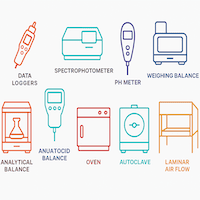
Tools and equipment for climatic management of insectary to successful raise of insects
Environmental Control & Monitoring in Insectaries — Labitems Blog
Environmental Control & Monitoring in Insectaries
Building successful rearing facilities for agricultural and medical entomological insects through precise temperature, humidity, airflow, and monitoring systems.
A Labitems Knowledge Series · For Researchers, Insectary Managers & Entomologists
Introduction: Why Environmental Control Defines Insectary Success
A successful insectary—whether dedicated to agricultural pests like Helicoverpa armigera and Spodoptera litura, or to medically important vectors such as mosquitoes and sand flies—rests on one fundamental principle: controlled, reproducible environmental conditions. Insects are ectothermic organisms with thin, permeable cuticles, meaning their development, behavior, fecundity, vector competence, and survival are tightly coupled to ambient temperature, relative humidity (RH), airflow, and photoperiod. Even brief departures from species-specific optima can desynchronize colonies, shift life-cycle timing, increase mortality, and quietly invalidate weeks of experimental work.
For research-grade reproducibility and mass-rearing reliability, environmental control must be treated as core infrastructure rather than an accessory. A well-designed insectary integrates an HVAC system for primary climate regulation, dedicated humidifiers and dehumidifiers for moisture management, supplementary room heaters for cold-season stability, and continuous data loggers alongside calibrated thermometers and hygrometers for verification.
Equally important is biosecurity—HEPA filtration, controlled airflow, and arthropod containment prevent contamination and accidental release, especially for genetically modified or pathogen-infected colonies. This blog series walks through each of these subsystems, the science behind why they matter, and the practical considerations that separate a working insectary from an excellent one. Whether you are setting up a new facility or optimizing an existing one, the goal is the same: stable microclimates, validated by data, that let your insects—and your science—thrive.
Maintaining precise environmental conditions is fundamental to successful insect rearing and experimental reproducibility. Insectaries—specialized facilities designed for breeding and studying insects—require strict control of temperature, humidity, and airflow. When adequate funding is available, investing in a robust Heating, Ventilation, and Air Conditioning (HVAC) system is not just beneficial—it is essential. Variations in environmental parameters can significantly alter insect physiology, behavior, and life cycle dynamics, thereby compromising experimental outcomes and colony stability.
Insects are ectothermic organisms, meaning their body temperature and metabolic processes are directly influenced by ambient environmental conditions. Temperature, in particular, plays a critical role in regulating development rates, fecundity, survival, and vector competence in disease-transmitting species.
For example, studies such as Beck-Johnson et al. (2013) demonstrate that mosquito development rates and pathogen transmission potential are highly temperature-dependent. Similarly, Kingsolver & Huey (2008) highlight how even minor thermal fluctuations can influence insect performance curves and ecological fitness.
Relative humidity (RH) is another crucial parameter. Low humidity can lead to desiccation, while excessive humidity may promote fungal contamination. According to Gray & Bradley (2005), maintaining optimal RH is essential for larval survival and adult emergence in many insect species.
HVAC systems enable:
Precise temperature regulation (±1°C or better)
Stable humidity control
Air filtration to reduce contaminants — HEPA filters can be used for air circulation
Controlled airflow to prevent microclimate formation — excessive air pressure from the ceiling fans may force the contaminants to spread
These factors collectively ensure a stable and reproducible rearing environment.
Considerations
When implementing HVAC systems in insectaries, several design and operational considerations are critical:
1. Temperature Stability
Avoid frequent fluctuations. Even short-term deviations can disrupt circadian rhythms and developmental synchrony. A range of 25–28°C is common for many tropical species, but species-specific optimization is necessary.
2. Humidity Control
Maintain RH within species-specific thresholds (typically 60–80% for many mosquitoes). Use integrated humidifiers/dehumidifiers rather than standalone units for better control.
3. Airflow Management
Laminar airflow is preferred in sensitive experimental zones. Avoid strong drafts that may stress insects or interfere with flight behavior.
4. Filtration and Biosecurity
HEPA (High-Efficiency Particulate Air) filters help prevent contamination and accidental release of insects—especially important in genetically modified or pathogen-infected colonies. If you are looking to maintain different levels of arthropod containment facilities then this kind of system will meet regulatory requirements. Minimize the unwanted release and escape of mosquitoes from insects into the natural environment.
5. Monitoring and Automation
Digital sensors and data loggers should continuously track temperature and humidity. Automated systems allow real-time adjustments and alerts in case of deviations.
Humidity is one of the most critical yet often underestimated environmental parameters in insect rearing systems. While temperature frequently receives primary attention, relative humidity (RH) directly influences insect survival, development, reproduction, and behavior. In agricultural entomology—where species such as Helicoverpa armigera, Spodoptera litura, Bemisia tabaci, and stored-product pests are routinely reared—precise moisture control is essential for maintaining healthy, reproducible colonies.
When resources allow, integrating humidifiers and dehumidifiers into insectary infrastructure provides the level of environmental precision required for high-quality research and mass-rearing programs.
Relative humidity refers to the amount of water vapor present in the air relative to its maximum capacity at a given temperature. Insects, due to their high surface-area-to-volume ratio and permeable cuticle (especially in immature stages), are highly susceptible to water loss or gain.
Low RH conditions can cause desiccation, leading to reduced egg hatch rates, larval mortality, and decreased adult longevity. Conversely, excessively high RH promotes microbial growth, including fungi and bacteria, which can devastate insect colonies.
As reported by Chapman (2013), The Insects: Structure and Function, water balance is a fundamental physiological constraint in insects, influencing osmoregulation and cuticular permeability. Similarly, Scriber & Slansky (1981) demonstrated that larval feeding efficiency and growth in herbivorous insects are closely tied to ambient moisture conditions, as humidity affects both insect physiology and host plant quality.
Humidity also affects:
Egg viability: Many lepidopteran eggs require moderate RH (60–80%) for proper embryonic development.
Molting success: Insufficient humidity can hinder ecdysis (shedding of exoskeleton).
Adult behavior: Flight activity, mating, and oviposition are often humidity-dependent.
Thus, humidifiers and dehumidifiers are not just environmental accessories—they are biological control tools.
Lab/Field Relevance & Application
Role of Humidifiers
Humidifiers are essential in environments where RH drops below optimal levels, particularly in air-conditioned insectaries or dry climates. In agricultural insect rearing:
Lepidopteran pests (e.g., Spodoptera litura, Helicoverpa armigera) require moderate to high humidity during larval and pupal stages to prevent desiccation.
Aphids and whiteflies (Bemisia tabaci) thrive in moderately humid environments, which support feeding and reproduction on host plants.
Humidifiers help maintain consistent RH, especially when HVAC systems reduce ambient moisture. Ultrasonic or steam-based humidifiers are commonly used for precise control.
Role of Dehumidifiers
Dehumidifiers become critical in high-moisture environments, particularly when:
Rearing stored-product pests (e.g., Tribolium castaneum) where excess moisture promotes mold growth in grain media
Managing fungal contamination in artificial diet-based rearing systems
Preventing condensation in enclosed rearing cages or climate chambers
Excess humidity can lead to:
Diet spoilage
Increased pathogen load
Reduced colony productivity
Dehumidifiers ensure RH does not exceed thresholds that compromise colony health.
Integration with Rearing Systems
In practical insectary setups, humidifiers and dehumidifiers work alongside HVAC systems to maintain stable microclimates. For example:
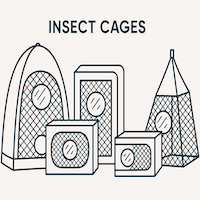
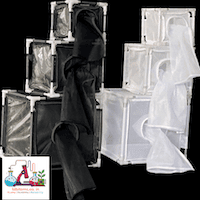
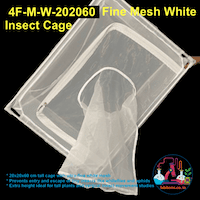
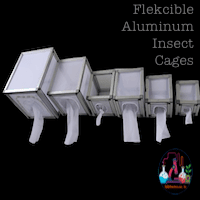
Insect-rearing cages such as the 4E-M-W series insect cage from Labitems benefit from stable humidity conditions to prevent stress and ensure natural behavior.
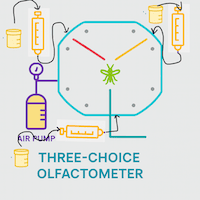
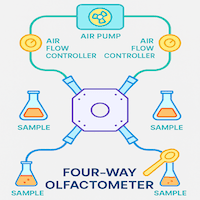
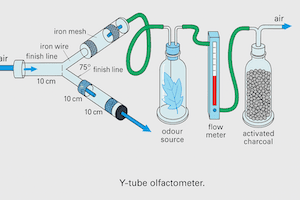
Behavioral assays (e.g., olfactometer studies) require controlled RH to maintain odor plume stability and insect responsiveness.
Figure 1: Diagram showing integration of humidifier and dehumidifier units within an insectary climate control system.
Best Practices / Considerations
1. Species-Specific Requirements
Different agricultural insects have distinct RH requirements:
Lepidoptera: typically 60–80% RH
Coleoptera (stored-product pests): often 50–70% RH
Hemiptera (aphids, whiteflies): moderate RH with host plant considerations
Always tailor humidity settings to the target species.
2. Avoid Rapid Fluctuations
Sudden changes in humidity can stress insects and disrupt development. Automated systems with gradual adjustments are preferred.
3. Placement of Devices
Position humidifiers and dehumidifiers to ensure even distribution. Avoid direct airflow onto cages, which may create microclimatic extremes.
4. Monitor Continuously
Use calibrated hygrometers or digital sensors to track RH. Data logging supports reproducibility and troubleshooting.
5. Maintenance and Hygiene
Humidifiers can become sources of microbial contamination if not cleaned regularly. Use distilled water where possible and follow strict maintenance protocols.
6. Integration with Temperature Control
Humidity and temperature are interdependent. HVAC systems should be calibrated to work in harmony with humidification/dehumidification units.
3. Temperature and Relative Humidity (RH) Data Loggers in Insect Rearing Systems
Introduction
Precise environmental monitoring is the backbone of any successful insect rearing program. While HVAC systems, humidifiers, and dehumidifiers regulate conditions, temperature and relative humidity (RH) data loggers ensure that these conditions are consistently maintained and scientifically validated. In agricultural entomology—where reproducibility, colony health, and experimental accuracy are critical—data loggers provide continuous, objective records of environmental parameters.
Without reliable monitoring, even well-designed insectaries risk unnoticed fluctuations that can compromise insect development, behavior, and experimental outcomes.
Temperature and RH directly influence insect physiology, including metabolic rate, development time, fecundity, and survival. Because insects are ectothermic, even small deviations from optimal conditions can alter biological processes.
For instance:
Development rates in lepidopteran pests such as Helicoverpa armigera are tightly linked to temperature (degree-day relationships).
Water balance in insects, as described by Chapman (2013), is governed by ambient RH, affecting desiccation resistance and cuticular permeability.
Behavioral responses, including feeding and oviposition, are influenced by microclimatic conditions.
Data loggers capture these environmental variables at high temporal resolution, enabling researchers to correlate environmental fluctuations with biological responses—an essential requirement for reproducible science.
Lab/Field Relevance & Application
Why Data Loggers Matter in Successful Insect Rearing in General
In rearing systems for species such as Spodoptera litura, Bemisia tabaci, Tribolium castaneum, and aphids, maintaining stable environmental conditions is crucial. Data loggers provide:
Continuous monitoring (24/7 recording of temperature and RH)
Detection of fluctuations that may not be visible in manual readings
Validation of experimental conditions for publications and regulatory compliance
Troubleshooting support in case of colony crashes or inconsistent results
For example:
In artificial diet rearing of lepidopterans, unnoticed RH spikes may lead to fungal contamination.
In whitefly rearing, slight temperature increases can accelerate life cycles, skewing experimental timelines.
Integration with Insectary Infrastructure
Integration with insectary infrastructure is recommended rather than thinking the insectary in isolation.
Figure 2: Placement of temperature and RH data loggers at appropriate places within insectary rooms for accurate environmental monitoring. Height of placement is crucial.
Types of Data Loggers
1. Standalone Data Loggers
Internal memory storage
Periodic manual data download (USB/Bluetooth)
Best Practices / Considerations
1. Sensor Accuracy and Calibration
Choose loggers with high accuracy (±0.2–0.5°C, ±2–3% RH). Regular calibration is essential to ensure data reliability.
2. Strategic Placement
Avoid placing sensors:
Directly in airflow from vents
Near heat sources or humidifiers
Instead, position them at insect level to capture true microenvironment conditions.
3. Logging Frequency
Set appropriate intervals (e.g., every 5–15 minutes). High-resolution data helps detect short-term fluctuations.
4. Data Management
Maintain organized records:
Use software for visualization and analysis
Archive data for reproducibility and audits
5. Alarm Systems
Enable alerts for deviations beyond set thresholds. This is especially important for sensitive colonies or long-term experiments. However, this kind of setup is expensive and may not be a standard feature with regular data loggers.
6. Maintenance
Regularly check battery life, sensor integrity, and data storage capacity to avoid data loss.
Maintaining Stable Temperatures in Cold Environments
Insect rearing facilities located in temperate or high-altitude regions often face a fundamental challenge—maintaining optimal temperatures during cold seasons. Since most agriculturally important insects are adapted to warm climates, low ambient temperatures can severely disrupt their development, survival, and reproduction.
Room heaters play a critical role in such scenarios by supplementing HVAC systems or serving as primary heating sources where centralized systems are limited. When properly selected and integrated, heaters ensure that insectaries maintain stable, biologically relevant temperatures throughout the year.
Insects are ectothermic organisms, meaning their physiological processes are governed by environmental temperature. Each species has a defined thermal range for optimal growth and development.
For example:
Lepidopteran pests like Helicoverpa armigera typically require temperatures of 25–28°C for optimal larval development.
Stored-product insects such as Tribolium castaneum show reduced activity and reproduction below ~20°C.
According to Angilletta (2009), Thermal Adaptation, temperature influences enzyme kinetics, metabolic rate, and developmental timing in insects. Lower temperatures slow metabolism, extend life cycles, and can even induce diapause (a state of arrested development).
Room heaters help maintain temperatures within the thermal performance curve, ensuring insects remain in their optimal physiological range.
Lab/Field Relevance & Application
Why Room Heaters Are Essential in Cold Conditions
In colder regions or winter months, ambient temperatures may fall well below the required range for insect rearing. Room heaters help:
Prevent developmental delays and extended life cycles. Lower temperatures will slow down development cycles of insects
Avoid cold-induced mortality, especially in eggs and early instars
Maintain consistent experimental timelines
Support continuous colony maintenance without seasonal interruption
Common Applications in Agricultural Insect Rearing
Lepidopteran rearing rooms: Maintaining stable warmth for larval growth on artificial diets
Aphid and whitefly cultures: Ensuring host plants and insects remain physiologically active
Stored-product pest studies: Preventing dormancy or inactivity at low temperatures
Temperature and RH data loggers (for monitoring stability)
In setups using insect-rearing cages (e.g., Labitems 4E-M-W series), heaters help maintain uniform temperature across cage levels, reducing variability in insect development.
Figure 3: Placement of room heaters in an insectary showing uniform heat distribution and avoidance of direct airflow on insect cages.
Best Practices / Considerations
1. Uniform Heat Distribution
Avoid localized overheating. Use heaters with fans or pair them with air circulation systems to ensure even temperature distribution.
2. Avoid Direct Exposure
Do not place heaters directly facing insect cages. Excessive localized heat can:
Stress insects
Dry out diets or host plants
Create microclimate inconsistencies
3. Combine with Humidity Control
Heating reduces relative humidity. Always integrate with humidifiers to maintain RH balance.
Accurate measurement is the foundation of controlled insect rearing. While HVAC systems, humidifiers, and heaters regulate environmental conditions, thermometers and hygrometers provide the real-time feedback needed to verify and maintain those conditions.
In agricultural insect rearing—whether working with Spodoptera litura, Helicoverpa armigera, aphids, or stored-product pests—these instruments are indispensable for ensuring that temperature and relative humidity (RH) remain within biologically optimal ranges.
Temperature and RH directly influence insect physiology, including metabolism, water balance, and development rate. Because insects are highly sensitive to microclimatic variations:
Thermometers measure ambient temperature, which determines metabolic speed and life cycle duration
Hygrometers measure RH, which affects desiccation, molting success, and egg viability
As described in Chapman (2013), insect water balance is tightly regulated by environmental humidity, while temperature governs enzyme activity and physiological processes. Even small deviations (±1–2°C or ±5% RH) can lead to measurable differences in growth, fecundity, and survival.
Limited in continuous monitoring — manual data logging is needed. Better to have one of this type in the insectary alongside digital thermometers and electronic data loggers for cross-referenced recording
Thermometers and hygrometers are used at multiple levels within an insectary:
Room level: To monitor overall environmental conditions
Cage level: To assess microclimates experienced by insects
Equipment level: Near humidifiers, heaters, or air vents
They are especially critical in agricultural insect rearing for:
Maintaining optimal conditions for lepidopteran larvae on artificial diets
Monitoring RH in stored-product pest cultures to prevent mold
Ensuring stable environments for aphids and whiteflies on host plants
In setups using insect-rearing cages (e.g., Labitems 4E-M-W series), placing combined thermometer-hygrometer units inside representative cages helps capture the actual conditions experienced by insects.
Best Practices / Considerations
1. Placement Matters
Position at insect level, not just room level
Avoid direct airflow from vents, heaters, or humidifiers
Use multiple units in large rooms
2. Calibration
Regular calibration ensures accuracy
Cross-check with reference instruments periodically
3. Avoid Microclimate Bias
Do not place sensors near walls, windows, or heat sources
Ensure readings represent the general environment
4. Combine with Data Loggers
While thermometers and hygrometers provide real-time readings, pairing them with data loggers allows continuous recording and trend analysis.
5. Readability and Accessibility
Use devices with clear digital displays
Ensure easy access for routine monitoring
Figure 4: Thermometer and hygrometer placement in insectary cages and rooms showing real-time monitoring of temperature and RH.